• When we see photographs of the moon, we are usually looking at a gray, dusty, dull surface. That layer of dust and broken rock is called lunar regolith and one day, it will play a major role in building future Moon bases.

    What is Regolith?

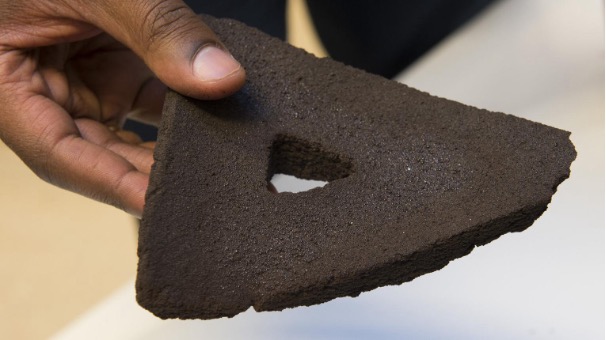
    Regolith is the layer of loose material that covers the surface of the Moon. Lunar Regolith is made up of dust, broken rock, and even tiny glass particles that were created by the impacts of meteors on the lunar surface over millions of years. Unlike on Earth, the Moon has no atmosphere, wind, or flowing water that can erode this layer and smoothen it out. As a result, lunar regolith remains rough and jagged.

    Composition of Lunar Regolith

    Lunar regolith is made mostly of crushed space rocks and minerals. Common components include:

    • Silicates containing oxygen and silicon
    • Feldspar minerals
    • Small amounts of iron and titanium compounds
    • Tiny glass particles

    Because oxygen is locked inside many of these minerals, scientists hope future astronauts may be able to extract it for breathing and rocket fuel production. A promising avenue of research today is to use solar chemistry for this.

    Particle Sizes and Mechanical Properties

    Regolith particles can be very small, such as fine dust or slightly larger: think gravel-sized fragments. The lunar surface is constantly bombarded by solar wind and ultraviolet radiation. This charges the regolith particles, giving them the ability to stick to surfaces easily. Mechanically, lunar regolith is interesting because it can support heavy loads and can be compacted into strong structures.

    How Does Lunar Regolith Differ from Earth Soil?

    Lunar regolith is different from Earth soil because it does not contain organic material like plants or microbes, and it has never been affected by weather like rain or wind. This makes it much sharper and more abrasive than soil on Earth.

    Why is Lunar Regolith Important?

    Transporting building materials from Earth to the moon is costly. Using local lunar regolith could allow construction of landing pads and radiation shields more easily on the Moon. This concept, called In-Situ Resource Utilization (ISRU), can reduce the cost of long-term lunar exploration. Researchers are testing several ways to use regolith for construction such as 3D Printing, Sintering (building bricks without cement) and Radiation Shielding (blocking cosmic radiation).

    Fun Fact: What does moon dust smell like?

    When Apollo astronauts returned to their lunar modules, tiny regolith particles stuck to their spacesuits. Astronauts reported that the dust smelled like burnt gunpowder after exposure to oxygen inside the spacecraft.

    Why Lunar Dust Is a Challenge

    Although lunar regolith is useful, it also creates problems:

    • Sharp particles can damage spacesuits.
    • Dust can wear down seals and machinery.
    • Fine particles can irritate lungs if inhaled.
    • Dust sticks to surfaces because of electrostatic charging.

    Scientists are actively researching this material to find new ways to combat these challenges. Many scientists believe lunar regolith will become the first “space construction material” used by humans beyond Earth!Top of Form

  • 2–3 minutes

    Asphalt, the building block:

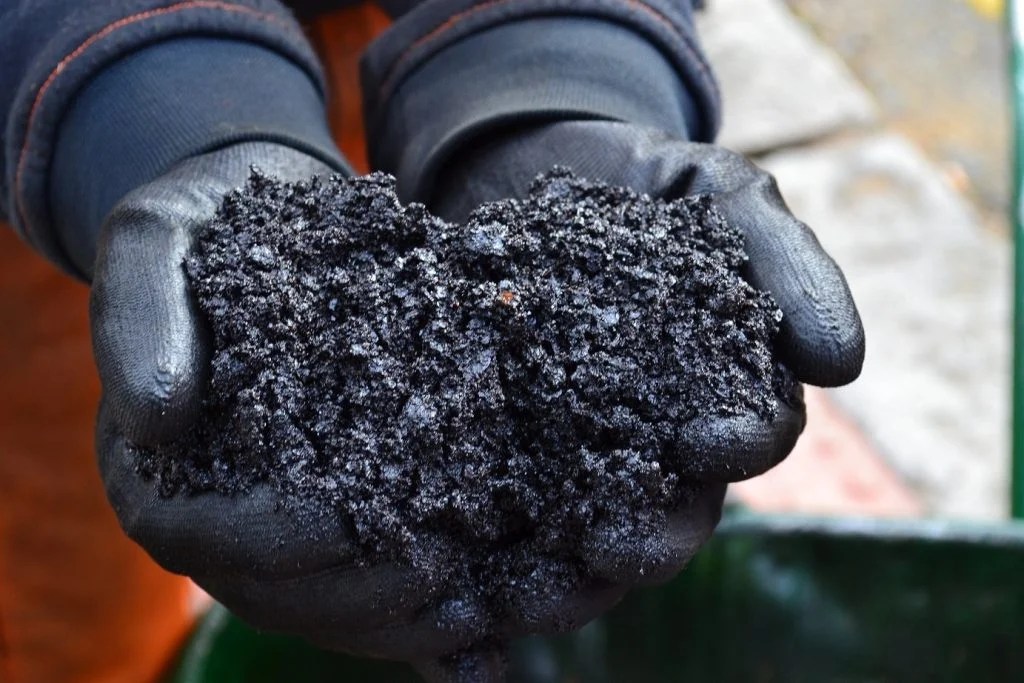
    If you’ve ever noticed how the road feels softer or hotter than everything around it, you’re not imagining things. That everyday road beneath your feet is a carefully engineered material, asphalt, designed to handle heat, pressure, and constant use. Asphalt is often chosen when building roads because it can be laid quickly and is cost-effective. Asphalt is made from a mixture of aggregates—like rocks, sand, and gravel—held together by a sticky black binder that comes from crude oil. The binder provides adhesive and waterproof properties to the asphalt. It holds the mix constituents together and prevents the mix from flowing and segregating.

    Asphalt, the microscopic view:

    Chemically, asphalt contains long chains of Carbon and Hydrogen molecules, called Hydrocarbons. It also contains small amounts of other elements like sulfur, oxygen, and nitrogen. Different crude oils produce asphalts with varying carbon, hydrogen, sulfur, oxygen, nitrogen, and trace metals. These elements are particularly important in dictating asphalt’s physical and chemical characteristics, such as strength and flexibility. Asphalt needs to be strong enough to support cars and trucks, but flexible enough to bend slightly without cracking.

    The Challenges:

    Even though asphalt is strong, it isn’t perfect. Where I live, heat plays a major role in
    how asphalt behaves. Asphalt absorbs a lot of heat and during the summer, high temperatures can soften the binder, making roads more likely to develop ruts or slight dents from heavy vehicles. Over time, constant heat, air and traffic can cause asphalt to wear down, making it dry and brittle and causing cracks. In places with frigid winters, water that gets into the cracks can freeze and expand, causing potholes. That is why you might see road repairs or resurfacing projects around town. Because asphalt is made using a binder derived from crude oil, global events such as the ongoing conflict in Iran can have a direct impact on something as local as road construction. When oil prices rise, the cost of producing asphalt increases, making it more expensive to build and repair roads.

    The Future:

    To deal with these challenges, engineers are exploring alternatives like recycled asphalt, which reuses old road materials, and bio-based binders made from plants instead of petroleum. These innovations aim to make roads more affordable and sustainable, especially in growing communities where new construction is happening all the time.
    Next time you walk or drive on a road near you, take a closer look at the pavement. It’s not just
    “blacktop”, it’s material science in action, designed to keep our communities moving every day.

  • 2–3 minutes
    2–3 minutes

    We’ve all been there, you pull your favorite cotton hoodie out of the dryer, and suddenly it looks like it belongs to a toddler, about 10 sizes smaller than when it went in. This is a frustrating mystery for most, but your laundry unit is not actually eating your clothes, it is just triggering a bit of materials science. The shrinking of our clothes is a reaction rooted in how clothes are manufactured.

    Shrinking normally happens to clothes made of natural fibers like cotton, wool, and linen. During the manufacturing process, fibers of these materials are pulled, stretched, and twisted to create smooth, even yarns. This is similar to a rubber band being stretched and held tight for a long period of time. When the tension that keeps the fibers stretched is broken or released, they relax and return to their natural, shorter, and more “curly” state, like the rubber band snapping back into place. Scientists call this shrinkage. 

    Here is a great video that explains how cotton from cotton seeds is transformed into clothing that we can wear.

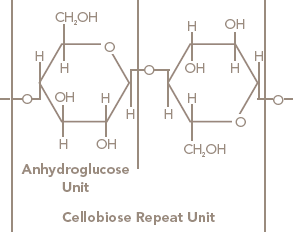
    So, what is it about the washing and drying units that does this? Heat from the dryer is the main culprit. Cotton is basically cellulose, a natural polymer made of long chains of glucose molecules and held together by hydrogen bonds, like the picture below shows.

    High temperatures provide the energy needed to break these bonds that hold the fabric in its stretched-out shape. Once those bonds are broken, the fabric snaps back to its natural, small size. While all cotton is susceptible to this shrink when exposed to high heat, knit cotton shrinks more than woven cotton mainly because the interlaced structure of woven cotton is more stable.

    Synthetic fibers like polyester, nylon, and spandex are far more shrink resistant because they are thermoplastic, meaning that their fiber structure is locked-in during the manufacturing process . Normal heat and agitation from a dryer is not enough to make them“relax” like natural fibers. “Preshrunk” cotton is also a good alternative, as it has already been through a cycle of controlled shrinking, specifically designed to condense the fibers even before they reach your closet. By pre-stressing the fabric during production, manufacturers ensure that any residual tension is released, making sure that the clothing goes through minimal, if any, shrinkage.

    Pro Tip: To revert the shrinkage in a piece of clothing, try soaking it in lukewarm water mixed with a tablespoon of hair conditioner or baby shampoo . This helps relax the “wounded” fibers. While the cloth is damp, gently stretch it back out as close as possible to its original size, and lay flat on a towel to dry. After this, it is good as new!

  • 3–5 minutes

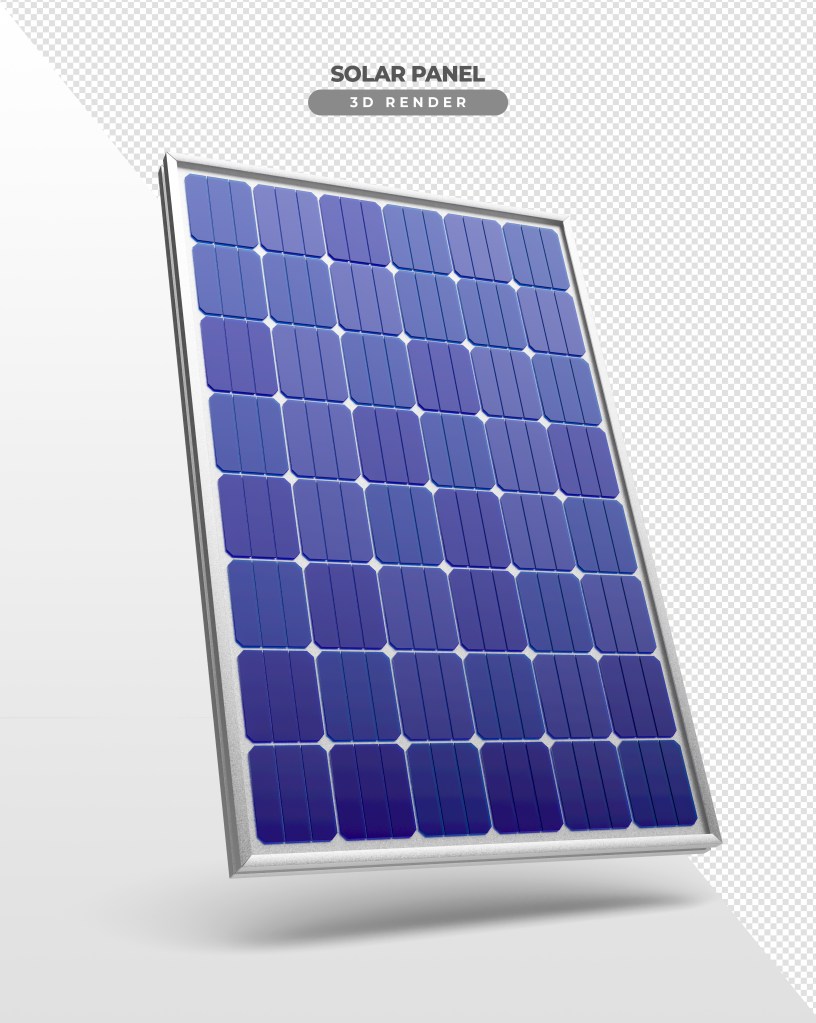
    You might have seen them — those dark blue or black rectangles on rooftops in Mountain House. Those are solar panels, and they produce electricity by turning sunlight into energy. This is one of the best examples how materials science works. Solar panels have no moving parts and do not need any fuel. They are simply layers of materials stacked one upon another, like a sandwich, that absorb energy from the Sun. But what exactly does this “sandwich” do – and why is it important?

    It All Starts with Silicon

    The heart of a solar panel is silicon — the stuff that beach sand is made of, and the second most abundant element on Earth after oxygen. But silicon has a special property: it is a semiconductor, which means it is not quite a conductor (like metal) and not quite an insulator (like rubber). This in-between property allows us to manipulate the conductivity through silicon, either increasing or decreasing it by a process called doping. To make solar panels, scientists take raw silicon, purify it and then slice it into paper-thin wafers. Each wafer becomes one solar cell. By connecting many of these cells together, a solar panel is created.

    The Photovoltaic Effect: Light Knocking Electrons Loose

    Solar cells are built in two layers, like a sandwich – a layer with extra electrons (called the Negative or N-Layer) and a layer that is missing electrons (called the Positive or P-Layer). We can do this because silicon is a semiconductor! The boundary where these two layers meet (called a P/N Junction) is where electrons can wander between layers, and this movement creates an electric field at the boundary. A field is simply a sphere of influence that exists around every particle with charge, such as electrons. A property of the electric field is that it exerts a force on any other electrons in that sphere of influence.  When sunlight hits a silicon atom at the P/N junction, photons (tiny packets of light energy) knock electrons loose from these atoms. Normally those electrons would just wander around randomly. But the presence of the electric fields at this junction forces all these loose electrons to move in a single direction from the positive layer to the negative layer, creating electric current. Scientists call this the photovoltaic effect — “photo” for light, “voltaic” for electricity.

    The Other Layers: Glass, Metal, and Anti-Reflective Coatings

    Silicon is the star of the solar panel, but it needs help from other materials. The top of a solar panel is covered in tempered glass — a specially treated glass to make it stronger. The glass protects the delicate cells from rain, hail, and other elements of weather that rooftops are exposed to. On top of the glass sits a thin anti-reflective coating.  Without it, shiny silicon would reflect away more than a quarter of the sunlight before it could even be captured. The coating gives panels their dark blue or black look and helps them absorb as much light as possible. If you look closely at a solar panel, you will notice a grid of thin silver lines across its surface. These silver or aluminum metal contacts act like metallic highways, gathering the electric current produced by the cell and sending it out of the panel.

    What About Efficiency?

    Not all sunlight that hits a solar panel becomes electricity. Most home panels today convert about 20-22% of sunlight into usable power. Researchers are always experimenting with new materials to push efficiency higher. Some labs are testing panels made with a material called perovskite —cheaper to make than silicon with efficiencies over 25% in the lab. We may see these on newer homes within a decade!

    Right Here in My Neighborhood

    Solar panels are becoming more common in my community, indeed all across California, partly because they help reduce electricity costs and partly because they produce energy without burning fossil fuels. In sunny regions like the Central Valley where I live , solar panels can generate a significant amount of power simply by sitting in the sun for a few hours each day. Three silicon solar cells generate about 1.5 volts of electricity — as much as one AA battery. A typical home solar panel strings together 60 to 72 cells and a full rooftop array of panels can power an entire house. This is material science in action, working quietly to power our homes!

  • 2–3 minutes

    We had a really fun snow day in Bear Valley with family and friends a couple of weeks ago.

    A big part of playing in snow is to dress appropriately and a big part of dressing appropriately is wearing snow pants. So that got me thinking about what magic ingredients in them made me feel so comfortable and stay so dry even after a day spent rolling, sliding, biking and tubing in the snow.

    • The Requirements
      • The basic problem in cold weather is that heat from the body radiates away into the surrounding air, a law of nature explained in the Second Law of Thermodynamics. This is bad because the organs in our bodies can only function optimally in a narrow temperature range (97°F-99°F). Snow clothing needs to act as a barrier between the skin and the cold air outside and prevent heat loss. So what do we want in snow pants?Thick layers (insulation), moisture-proof (warm and dry) and most importantly, stylish to look at!
    • The Candidates
      • While wool remains one of the best natural insulators known to humans, economics often requires more affordable alternatives thus many snow pants use synthetic materials instead:
        • Nylon: made up of NH-C-O atoms in a linear chain and the presence of Nitrogen makes the inter-molecular bonds in the chain strong, thus making the material flexible and strong (durable).
        • Polyester: made up of C,H,O atoms but arranged in rings that are non-polar (electrically neutral) so water molecules prefer to bond with each other than with polyester molecules, making the material naturally hydrophobic.
      • Here is a great video explaining these differences : https://www.youtube.com/watch?v=R_qBEY8Dry8
    • The Winning Formula
      • It is clear then, that polyester is a key material in making snow pants water-proof. In fact, specialized polyester material called coolmax can be used to make moisture management even more sophisticated. Finally, snow pants are usually a mix of 90% polyester and 10% spandex, another synthetic material that makes the pant material elastic and stretchable (think comfort fit!)
    • The Future
      • The biggest issue with synthetic materials such as nylon and polyester is that they are non-biodegradable. At the most basic level, they are plastics and contribute to landfill waste. Also, washing them can release microplastics which are extremely dangerous when they enter the food chain. So I want the future snow pant to be chemical free, have a better environmental footprint and still look and feel very stylish!

  • Subscribe to continue reading

    Subscribe to get access to the rest of this post and other subscriber-only content.

  • Ever since I learnt about the elements and the periodic table, it has amazed me that:

    • there actually are only 94 different kinds of atoms that we know about!
    • these 94 kinds of atoms combine and form so many millions of combinations that we know of as materials and exist all around us.

    So materials science and engineering, which is the study of the atomic and molecular properties of materials and their applications, is something I wanted to learn more about. But materials science and engineering is not just an abstract study at the atomic and sub-atomic level. Combining physics, chemistry, mathematics, recent advances in discovering, understanding and modifying materials have wildly diverse applications ranging from aerospace and agriculture to electronics and surgery.

    In this series of blog posts, I want to explore how materials play such a central role in my every day life, from basketballs, mirrors, electronic devices, solar panels and earthquake prevention. I hope to further my understanding and increase my appreciation for this exciting branch of science that I dream of making a contribution to, someday!