When we see photographs of the moon, we are usually looking at a gray, dusty, dull surface. That layer of dust and broken rock is called lunar regolith and one day, it will play a major role in building future Moon bases.
What is Regolith?
Regolith is the layer of loose material that covers the surface of the Moon. Lunar Regolith is made up of dust, broken rock, and even tiny glass particles that were created by the impacts of meteors on the lunar surface over millions of years. Unlike on Earth, the Moon has no atmosphere, wind, or flowing water that can erode this layer and smoothen it out. As a result, lunar regolith remains rough and jagged.
Composition of Lunar Regolith
Lunar regolith is made mostly of crushed space rocks and minerals. Common components include:
- Silicates containing oxygen and silicon
- Feldspar minerals
- Small amounts of iron and titanium compounds
- Tiny glass particles
Because oxygen is locked inside many of these minerals, scientists hope future astronauts may be able to extract it for breathing and rocket fuel production. A promising avenue of research today is to use solar chemistry for this.
Particle Sizes and Mechanical Properties
Regolith particles can be very small, such as fine dust or slightly larger: think gravel-sized fragments. The lunar surface is constantly bombarded by solar wind and ultraviolet radiation. This charges the regolith particles, giving them the ability to stick to surfaces easily. Mechanically, lunar regolith is interesting because it can support heavy loads and can be compacted into strong structures.
How Does Lunar Regolith Differ from Earth Soil?
Lunar regolith is different from Earth soil because it does not contain organic material like plants or microbes, and it has never been affected by weather like rain or wind. This makes it much sharper and more abrasive than soil on Earth.
Why is Lunar Regolith Important?
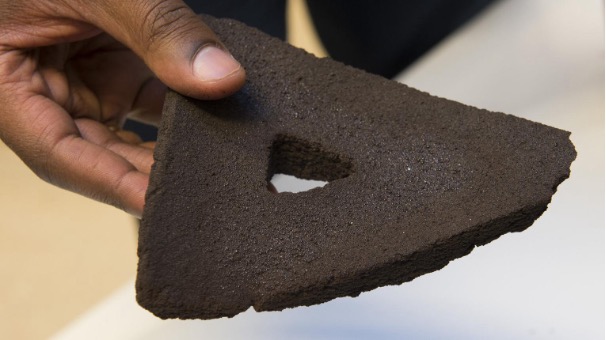
Transporting building materials from Earth to the moon is costly. Using local lunar regolith could allow construction of landing pads and radiation shields more easily on the Moon. This concept, called In-Situ Resource Utilization (ISRU), can reduce the cost of long-term lunar exploration. Researchers are testing several ways to use regolith for construction such as 3D Printing, Sintering (building bricks without cement) and Radiation Shielding (blocking cosmic radiation).
Fun Fact: What does moon dust smell like?
When Apollo astronauts returned to their lunar modules, tiny regolith particles stuck to their spacesuits. Astronauts reported that the dust smelled like burnt gunpowder after exposure to oxygen inside the spacecraft.
Why Lunar Dust Is a Challenge
Although lunar regolith is useful, it also creates problems:
- Sharp particles can damage spacesuits.
- Dust can wear down seals and machinery.
- Fine particles can irritate lungs if inhaled.
- Dust sticks to surfaces because of electrostatic charging.
Scientists are actively researching this material to find new ways to combat these challenges. Many scientists believe lunar regolith will become the first “space construction material” used by humans beyond Earth!Top of Form

What’s your take on this? Click below to leave a comment